Let's be honest. Staring at a wall of tents online or in a store is overwhelming. You see numbers, seasons, weird terms like "hydrostatic head," and prices that swing wildly. I've guided hundreds of first-time buyers, and the mistake I see most? Picking a tent based on a single feature—like the lowest price or the coolest color—without understanding how the pieces fit together for *your* kind of camping.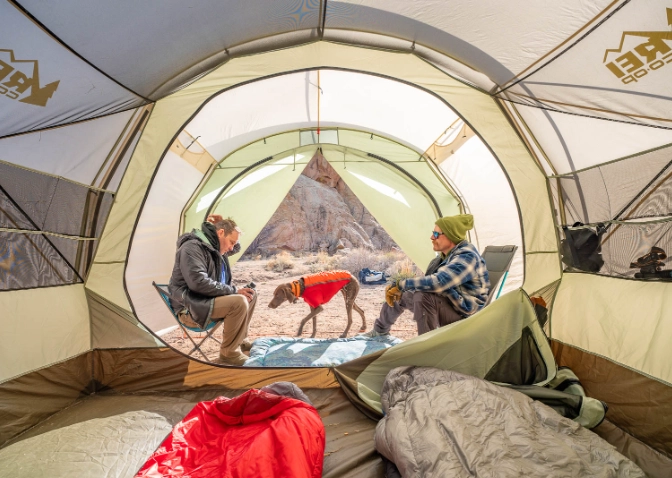
Choosing the right shelter isn't about finding the "best" tent. It's about finding the best tent *for you*. Get it wrong, and you're in for a miserable, wet, or cramped night. Get it right, and your tent becomes a cozy home base that makes every trip better.
After a decade of testing tents in everything from backyard sleepouts to week-long backcountry treks, I've boiled it down to five core decisions. Nail these, and you'll filter out 90% of the noise.
Your Quick Guide to Tent Selection
- 1. Tent Type & Season: Where and When You'll Camp
- 2. Size & Capacity: The Truth About "4-Person" Tents
- 3. Materials & Weight: Fabric, Poles, and Packability
- 4. Weather Protection: Staying Dry and Breathe Easy
- 5. Budget & Brand: Where to Spend and Where to Save
- Putting It All Together: A Decision Framework
1. Tent Type & Season: Where and When You'll Camp
This is your first and most critical filter. A tent designed for a music festival will fail on a windy ridge, and a mountaineering shelter is overkill for car camping.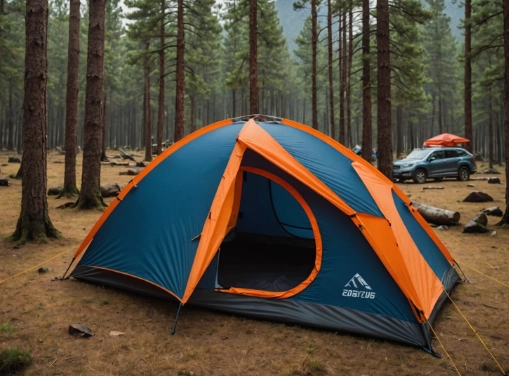
The "season" rating tells you what weather a tent is built to handle. Here's the real-world breakdown, beyond the marketing:
| Tent Type | Best For | Key Features | Not So Good For |
|---|---|---|---|
| 3-Season | Spring, Summer, Fall camping in mild to moderate conditions. This covers 80% of campers. | Mesh panels for ventilation, rainfly for showers, relatively lightweight. | Heavy snow, sustained high winds, extreme cold. |
| 3-4 Season / Extended Season | Shoulder seasons, high-altitude trips, or areas with unpredictable weather. My personal favorite for versatility. | Fewer mesh panels (more solid fabric), stronger poles, better wind shedding design. | Mid-summer in hot, humid climates (can get stuffy). |
| 4-Season / Mountaineering | Winter camping, alpine environments, expeditions with high wind/snow load. | Robust pole structure, minimal mesh, steep walls to shed snow. | Summer camping (it's like a sauna). Heavy and expensive. |
| Backpacking (a weight class, not a season) | Carrying your shelter on your back over distance. | Lightweight materials (often silicone-treated nylon), simplified pole sets. | Long-term base camps where weight isn't an issue. |
| Car Camping / Family | Driving to your site, prioritizing space and comfort over weight. | Tall ceilings, room dividers, large doors, heavy-duty fabrics. | Any trip where you have to carry it more than 100 yards. |
My non-consensus take? Most people should look hard at a 3-4 season tent. Why? The typical 3-season tent is optimized for ideal summer conditions. But weather is fickle. That extra bit of strength and thermal efficiency in a 3-4 season model buys you huge peace of mind for a minor weight penalty. I've been caught in freak late-spring snow and summer gales where my 3-4 season tent felt like a bunker, while others struggled.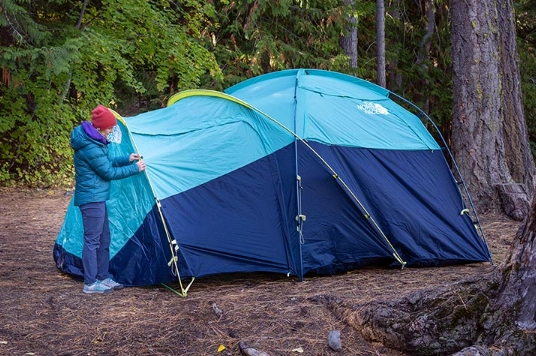
2. Size & Capacity: The Truth About "4-Person" Tents
Here's the industry's dirty little secret: capacity ratings are a fantasy. They assume everyone is a sleeping bag-sized mummy, lying shoulder-to-shoulder with zero gear inside.
For actual human beings who bring backpacks, shoes, and like to move, you need to downsize the label.
- Solo camper? Look at 2-person tents. You'll have room for you and your pack.
- Couple? A 3-person tent is comfortable. A 4-person is luxurious.
- Family of four? Start looking at 6-person tents or larger.
Ignore the "person" number. Look at the floor dimensions in square feet (or square meters). Here's a better guide:
- Minimalist: ~20 sq ft per person (backpacking).
- Comfortable: ~25-30 sq ft per person (car camping).
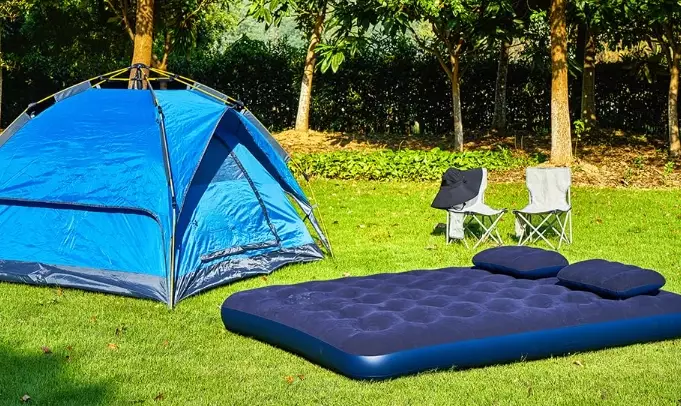
- Luxury: 35+ sq ft per person (family camping with cots/air mattresses).
Also, consider peak height. Can you sit up? Can you stand? If you're over 6 feet tall, a 40" peak height means you'll be crouching constantly. For car camping, a tent you can stand in (often 6' or taller) is a game-changer for changing clothes and morale on rainy days.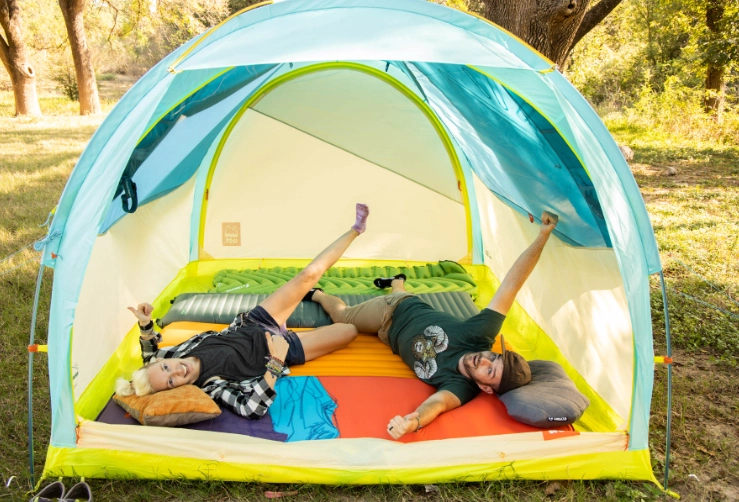
3. Materials & Weight: Fabric, Poles, and Packability
This is where cost and performance get real. Lighter and stronger usually means more expensive.
Fabric (The Fly & Floor)
Denier (D): This measures thread thickness. A higher number (e.g., 75D) is more durable and heavier. A lower number (e.g., 15D) is lighter and more packable, but also more delicate. A 20-30D floor is common for backpacking tents, but you might want a 40-70D floor for dog-friendly or high-traffic family camping.
Coatings: Polyurethane (PU) is common and affordable. Silicone-treated nylon (often called "silnylon") or polyester is lighter, more packable, and more UV-resistant, but costs more.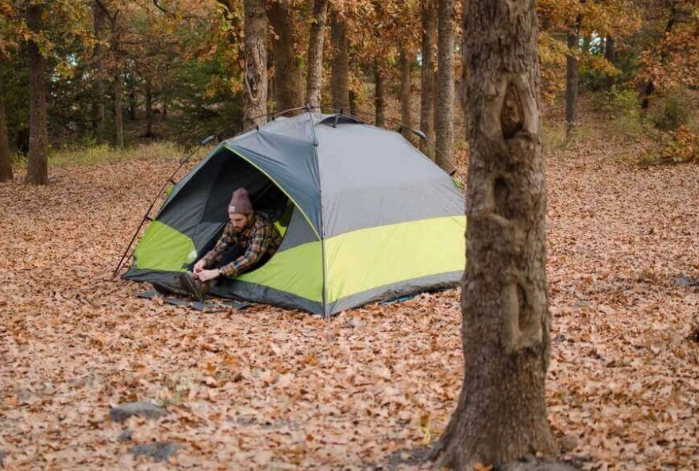
Poles
Almost all are aluminum or fiberglass.
- Aluminum (especially DAC): Lighter, stronger, more flexible (bends instead of snaps), and more expensive. The gold standard for performance tents.
- Fiberglass: Heavier, more brittle, and cheaper. Common on budget family tents. They can shatter in very cold weather or high stress.
Pole design matters too. Hubbed systems (where poles connect at a central hub) set up faster. Simple crossing poles are more reliable and easier to fix if one section fails.
4. Weather Protection: Staying Dry and Breathe Easy
Staying dry isn't just about the rainfly. It's a system.
Waterproof Ratings (Hydrostatic Head - HH): This measures how much water pressure the fabric can resist before leaking. For the rainfly, look for at least 1500mm. Good tents are 1500-3000mm. Don't obsess over ultra-high numbers (5000mm+); fully taped seams are more important. For the floor, you want at least 3000mm to resist ground moisture.
Seams: This is the #1 failure point. Fully taped seams are non-negotiable for a reliable tent. Some cheap tents only have sealed critical seams—avoid them.
Ventilation: This is the secret to avoiding condensation, which will get you wet even if it's not raining. Look for:
- A full-coverage rainfly that doesn't touch the inner tent, creating an air gap.
- Multiple vents (especially high up near the peak) and large mesh panels.
- The ability to roll back or door panels for airflow in good weather.
5. Budget & Brand: Where to Spend and Where to Save
You can spend $50 or $1000. What are you paying for?
- Under $150: Basic car camping tents, often with fiberglass poles, lower denier fabric, and minimal features. Fine for occasional, fair-weather use. Durability is a gamble.
- $150 - $350: The sweet spot for most campers. You get reliable 3-season tents from reputable brands (like REI Co-op, Coleman for car camping, Alps Mountaineering), aluminum poles, and decent weather protection.
- $350 - $600: High-performance 3-season and 3-4 season backpacking tents, and robust family tents. Premium materials (high-quality nylon, DAC poles), lighter weight, smarter designs (from brands like Big Agnes, MSR, NEMO).
- $600+: Specialized ultralight, expedition, or technical mountaineering tents.
My advice? Spend on the tent body. You can upgrade stakes, get a better footprint, or add a gear loft later. A poorly designed, leaky tent can't be fixed. Brands like REI, Big Agnes, and MSR have excellent warranties and customer service—that's worth a premium.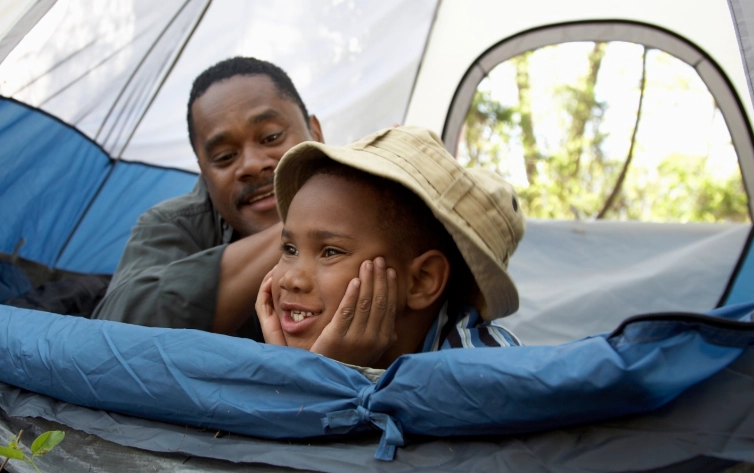
Consider buying from retailers with generous return policies, like REI, which allows you to return a tent even if you've used it and it failed you.
Putting It All Together: A Decision Framework
Let's make this practical. Imagine three common scenarios:
Scenario A: The New Family (Car camping at state parks, 2 adults, 2 young kids, minivan).
My Pick: A 6-person 3-season car camping tent with a high peak height (so dad can stand), a room divider for privacy, and a full-coverage rainfly with a decent HH (~2000mm). Weight is irrelevant. Durability (70D floor) is key for toys and kids. Budget: $250-$400. A brand like REI Kingdom or a robust Coleman with dark-room technology (for sleeping in) would be perfect.
Scenario B: The Weekend Backpacker (2 friends, 2-3 night trips in regional mountains, all seasons except deep winter).
My Pick: A 3-person 3-4 season backpacking tent. Why 3P for 2 people? Room for gear. Why 3-4 season? For wind and unexpected cold snaps. Look for aluminum poles, a double-wall design with lots of mesh, and a packaged weight under 6 lbs. Budget: $400-$550. Something like the MSR Hubba Hubba NX or Big Agnes Copper Spur HV UL3 fits the bill.
Scenario C: The Solo Adventurer (Long-distance thru-hiker, ultralight focus, but not a gram-counting extremist).
My Pick: A 1-person or small 2-person 3-season tent focused on weight and pack size. Silnylon or Dyneema composite fabric. Freestanding or semi-freestanding for ease of setup on rocky ground. Prioritize ventilation. Budget: $300-$600. Look at tents like the Six Moon Designs Lunar Solo or the Big Agnes Fly Creek HV UL2.
The right choice becomes obvious when you match the specs to a real picture of your trip.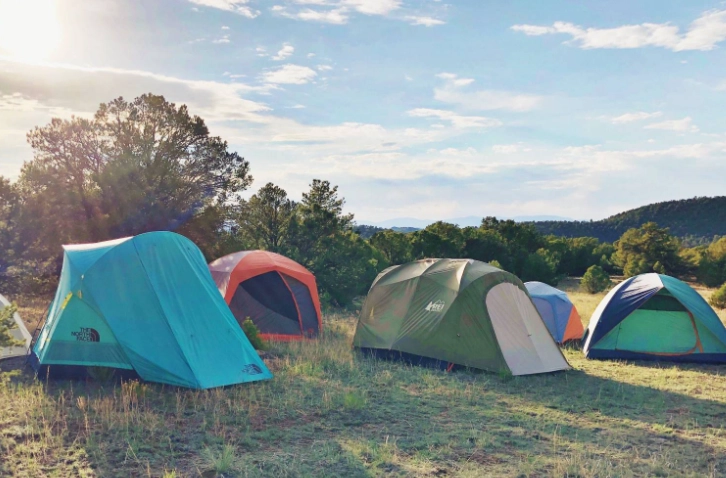
Your Tent Questions, Answered
Can a 3-season tent handle a surprise snowstorm in the mountains?
Is a '4-person' tent really big enough for four adults?
How important is the waterproof rating (HH) and is higher always better?
Should I buy the lightest tent possible for backpacking?
The bottom line? Choosing a camping tent is a puzzle with five main pieces: season, size, materials, weatherproofing, and budget. Fit them together around a clear picture of your own adventures—where you go, who you go with, and what you expect from the sky above. Skip the flashy marketing and focus on those specs. Do that, and you won't just buy a tent. You'll invest in better nights under the stars for years to come.
Now, go find that shelter. Your next adventure is waiting.